Best Time to Visit Phnom Kulen: A Season-by-Season Guide
Phnom Kulen doesn’t have a bad time of year, but it does have very different versions of itself depending on when you show up: bone-dry trails and a modest trickle over the falls in March, or muddy paths and a roaring waterfall in September. Which one you want is really the whole question.
The short answer
- Want full waterfalls and lush forest? Visit June to October, ideally September–October.
- Want easy trekking and reliable weather? Visit November to February.
- Want to avoid both crowds and rain? Aim for March or early November, the shoulder windows.
Cambodia’s two seasons
Like the rest of Siem Reap province, Phnom Kulen runs on two seasons: a dry season from roughly November to April, and a wet season from May to October. The dry season splits further into a cool stretch (November-February) and a hot stretch (March–April), while the wet season is wetter and more dramatic from August through October than it is in the earlier months of May and June.
Month-by-month for Phnom Kulen specifically
November – February (cool, dry):
The most comfortable window for trekking: clear skies, daytime temperatures in the high 20s°C, and trails that are dry underfoot. This is also peak tourist season across Siem Reap, so expect more company at Preah Ang Thom and the main waterfall, though the forest treks through Popel and Anlong Thom stay noticeably quieter than the paved-road sites. Waterfall flow is decent early in this window (November) and thins out by January-February as the dry season sets in.
March – April (hot, dry):
Cambodia’s hottest stretch, with temperatures regularly above 35°C and sometimes touching 40°C. Trails are driest here, which some trekkers prefer, but the heat is serious: plan treks for early morning, bring more water than you think you need, and expect the waterfalls to be at their lowest flow of the year. Mid-April brings Khmer New Year, a genuinely fun time to be in Cambodia but also one of the busiest.
May – July (early wet season):
Rain arrives, but mostly as short, intense afternoon downpours rather than all-day washouts, but mornings are often clear. The forest starts greening back up and the waterfalls begin to recover. Fewer tourists than the dry-season peak, and prices tend to soften.
August – October (peak wet season):
The wettest months, and the best ones for waterfalls: Phnom Kulen’s falls are at their fullest and most dramatic in this window, and the whole plateau is at its greenest. The tradeoff is real: trails can get muddy, some unpaved sections become harder going, and rain is more likely to affect a full day rather than just the afternoon. If a powerful waterfall is the priority and you don’t mind mud, this is the trade worth making.
What this means for the two CBTC treks
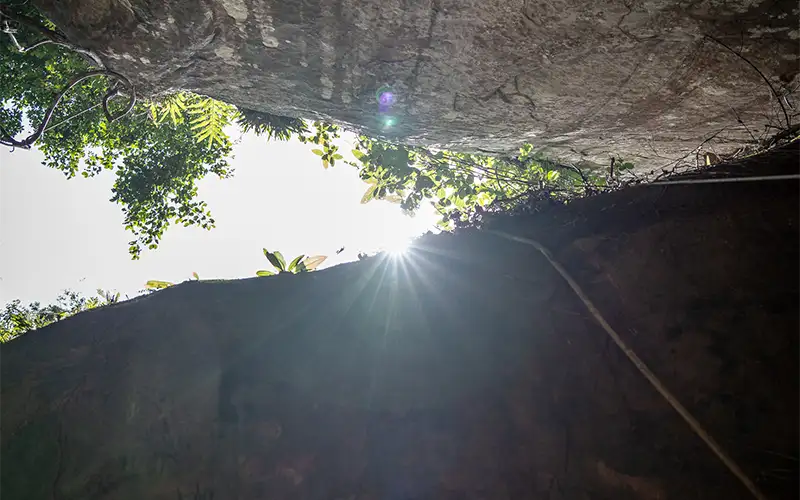
Popel and Anlong Thom’s trails aren’t paved, so seasonal conditions matter more for these treks than for the main roadside sites. In the wet season, expect muddier, slower going but a genuinely lush forest and fuller streams. In the dry season, trails are easier underfoot but the forest is noticeably drier and the waterfalls thinner. Neither guide team stops running treks for weather, but if you’re set on seeing water at its most powerful, that’s a wet-season trip; if you’d rather move quickly and stay dry, aim for December–February.
Practical planning notes
- Peak crowds: December–February, especially around Christmas/New Year and Khmer New Year (mid-April).
- Cheapest and quietest: May–July, before the heaviest rains set in.
- Best single trade-off: Late October–November, when the wet season’s greenery and water levels are still strong but the heaviest rain has mostly passed.
- What to pack either way: Closed shoes rather than sandals for the forest trails, a light rain layer if traveling May–October, and more water than feels necessary if traveling March–April.
The bottom line
There’s no single “best” month for Phnom Kulen, there’s a best month for what you actually want. Chase the waterfalls and you’ll want the wet season’s tail end. Chase easy trekking and clear photos and you’ll want the cool dry months. Either way, the shoulder seasons, March and late October/November, tend to offer the best balance of manageable weather and lighter crowds.